Academy Content × AI
An AI study app for math, science and Korean academy content: grounded, plain explanations, iPad solution coaching, and a book-pass revenue model.
An AI study app for math, science and Korean academy content: grounded, plain explanations, iPad solution coaching, and a book-pass revenue model.
Built by a former TA for high-school classes at Sidae Injae in Daechi-dong. Juhyeon Lee (Hanyang University, computer science) went through the Daechi-dong exam system firsthand; Jeonghan Lee (Myongji University, engineering) also worked as an academy TA. Designed from what students actually get stuck on and ask their TAs.
Every time a student asks, photographs a solution or retries a problem, it connects to the academy's own problem books, weekly packs and answer sheets.
Watch the math demo ↗The problems and answer sheets exist, but questions pile up on teaching assistants and the answers are never recorded.
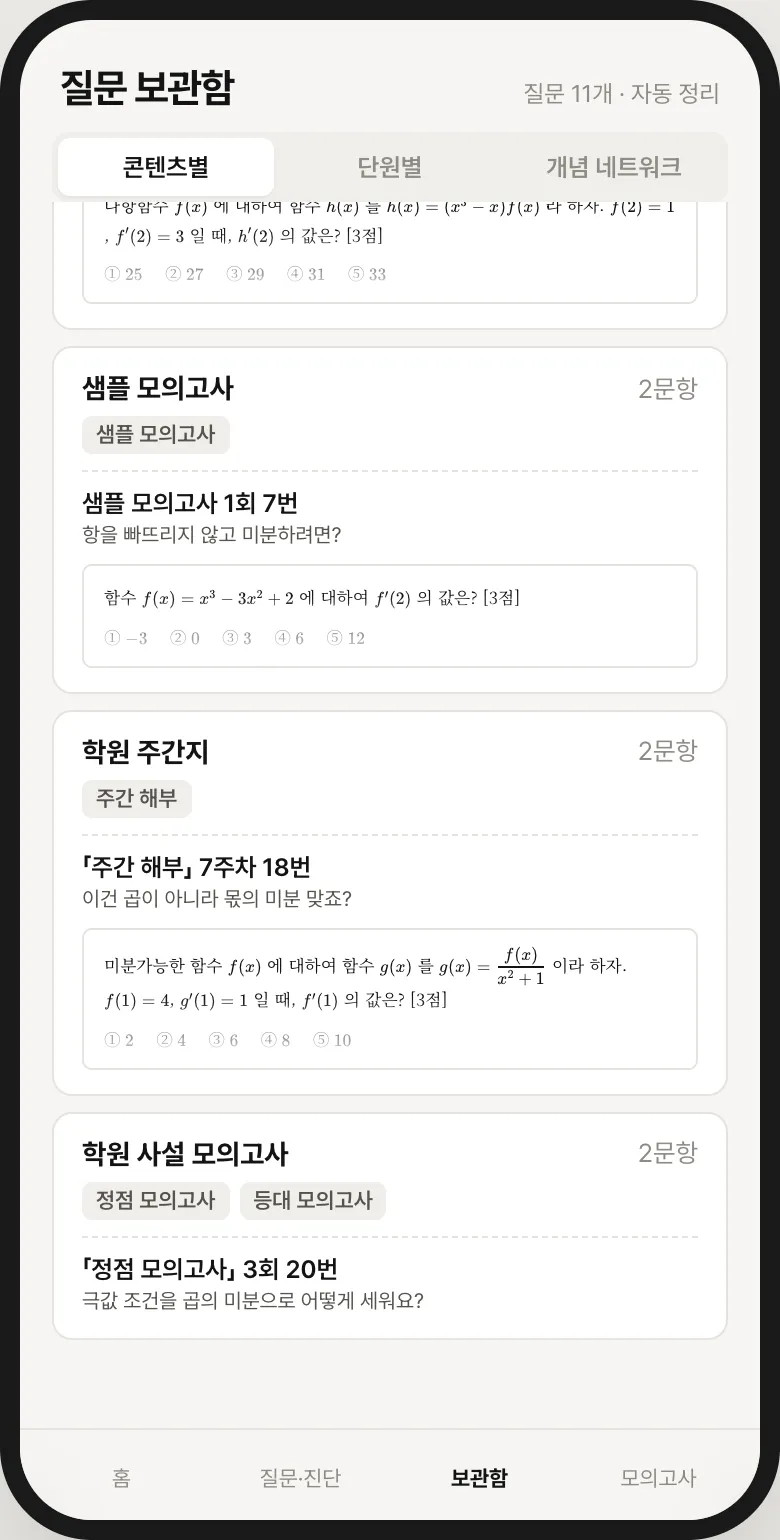
Grounded answers, handwritten-solution checks, in-house recommendations and a question archive in one app.
Students work through more of the academy's problems; the academy sees, problem by problem, where students get stuck.
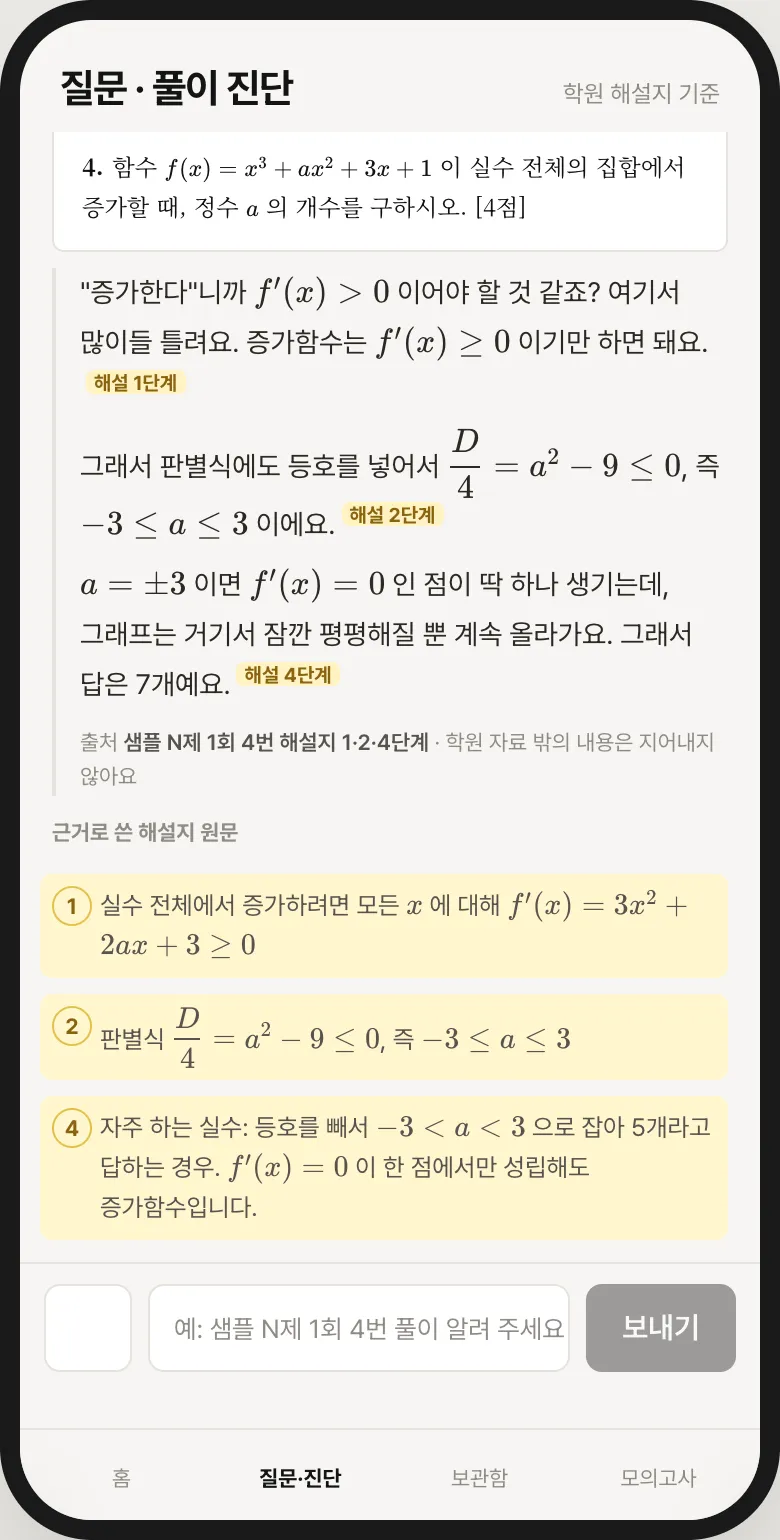
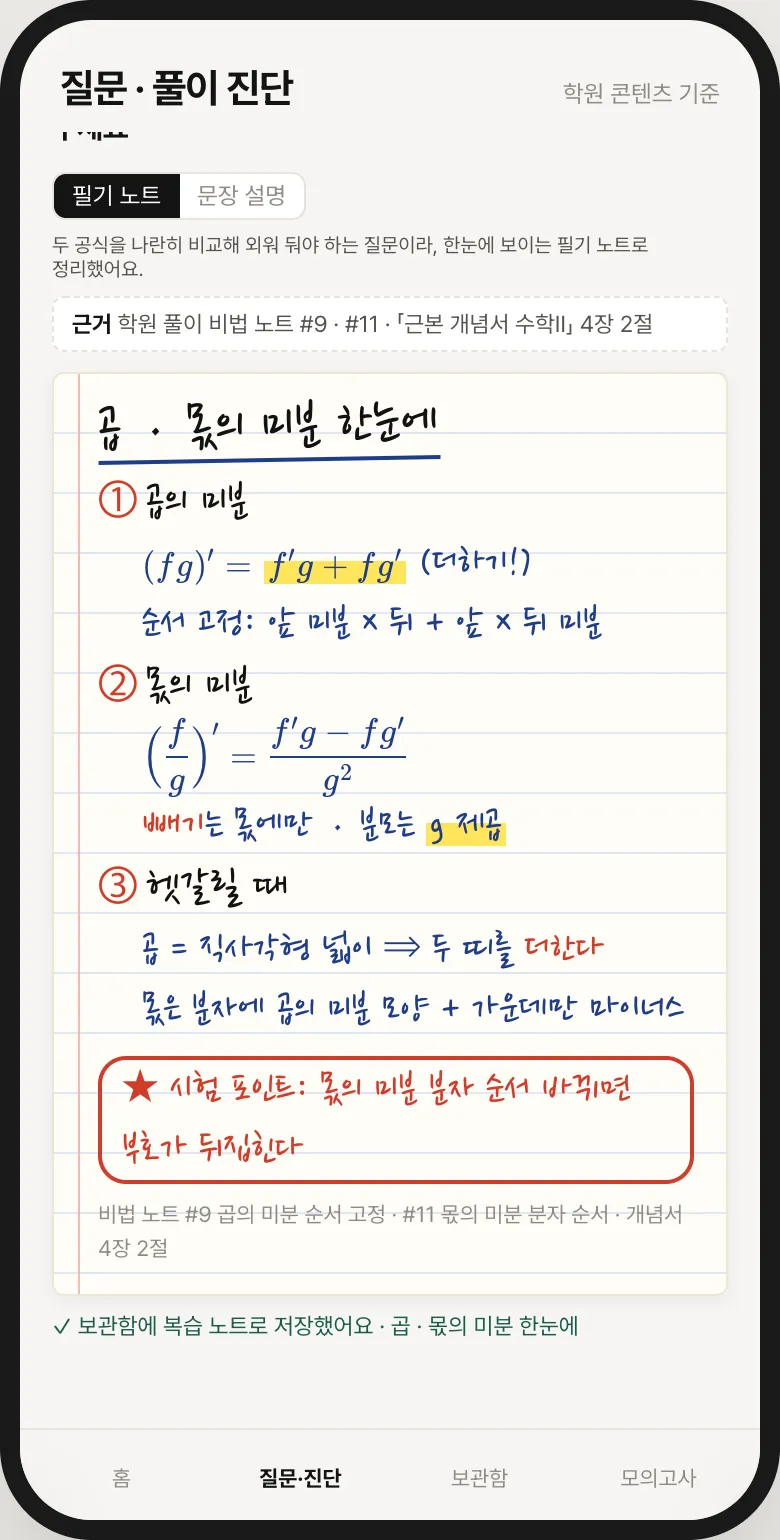
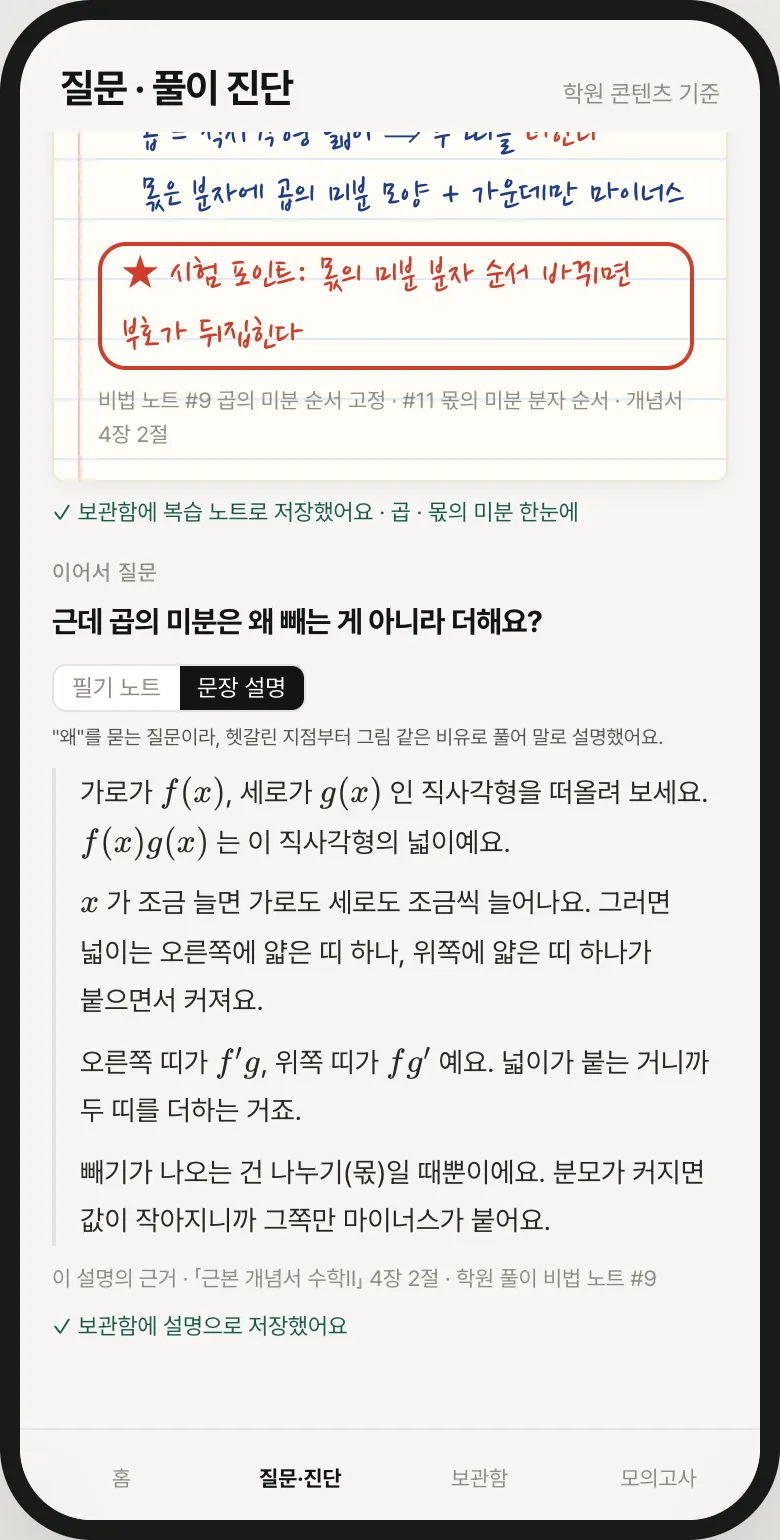
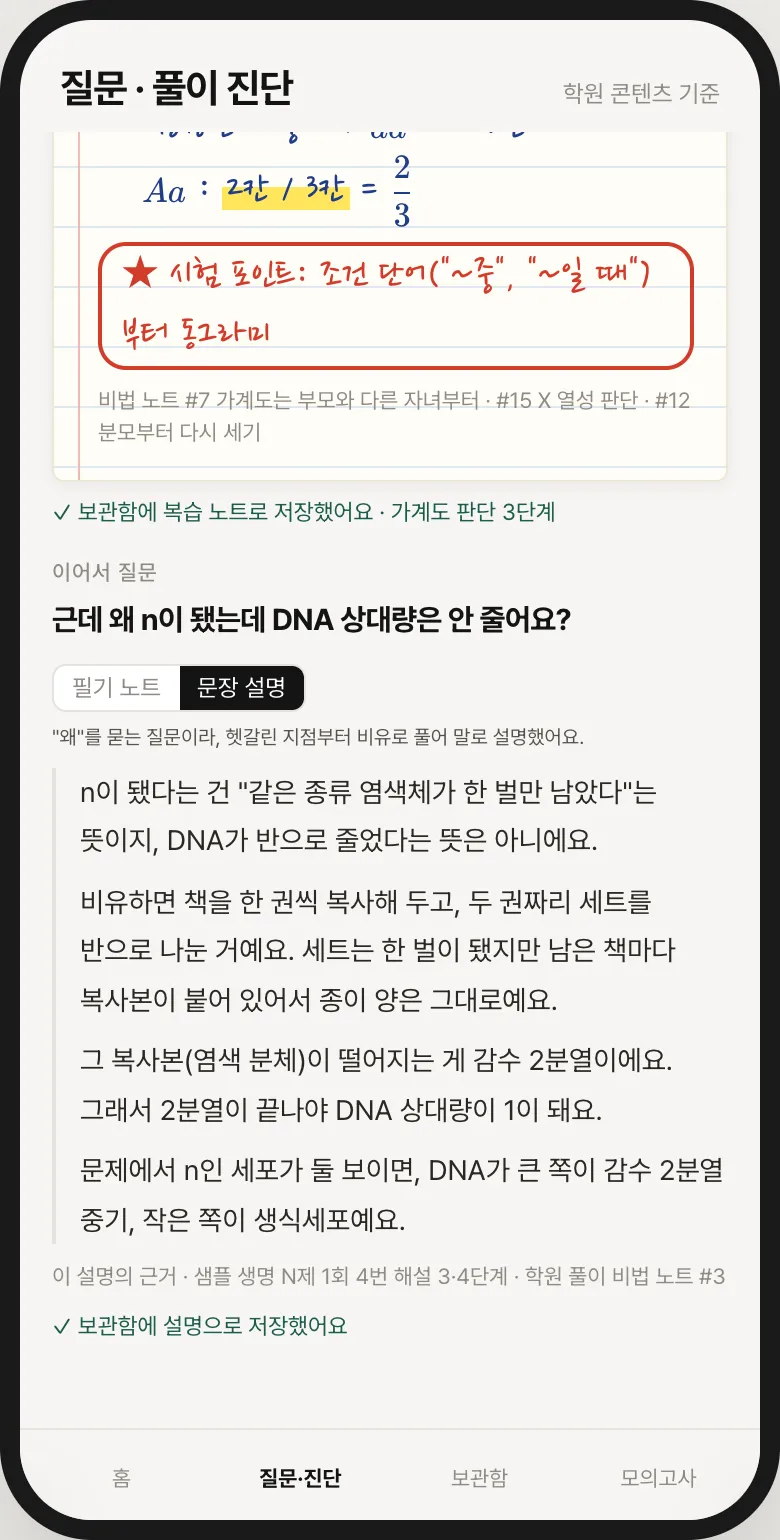
Answers always rest on the academy's material, but they are not copied from the answer sheet: they start from where the student is confused, in the easiest words and format.
The AI picks the format from the question. The answer sheet is the source; the goal is the easiest explanation.
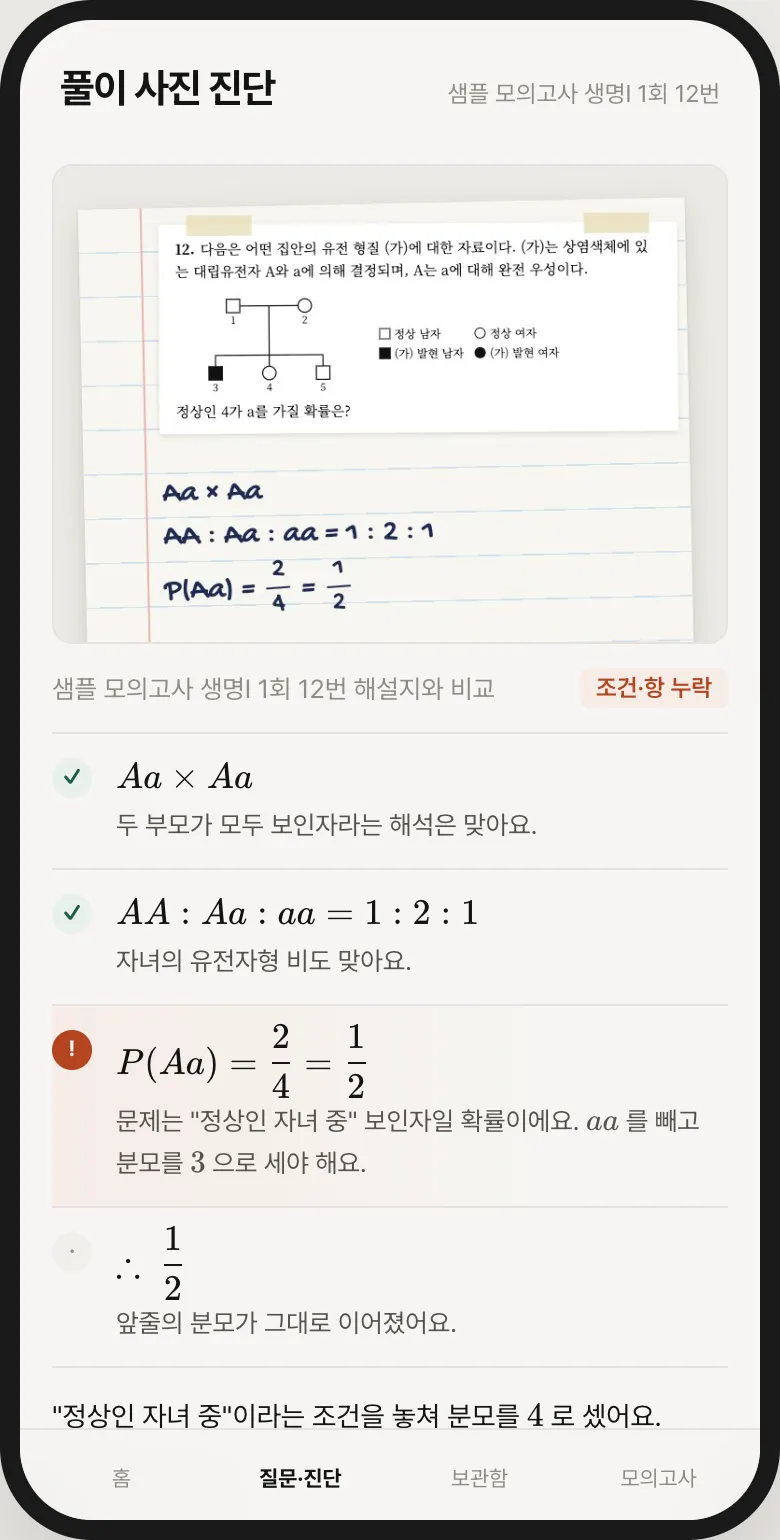
Built on Biology I samples: pedigrees and cell-division tables laid out like the national exam, with questions, checks and retries on top.
Watch the biology demo ↗Private problem sets are already strong. The difference is how deeply students use the explanations afterwards.
Questions on pedigree and table problems, solution checks, a concept map and iPad coaching on top of the content.
Where students get stuck on the hardest types gathers problem by problem and feeds the next problem book.
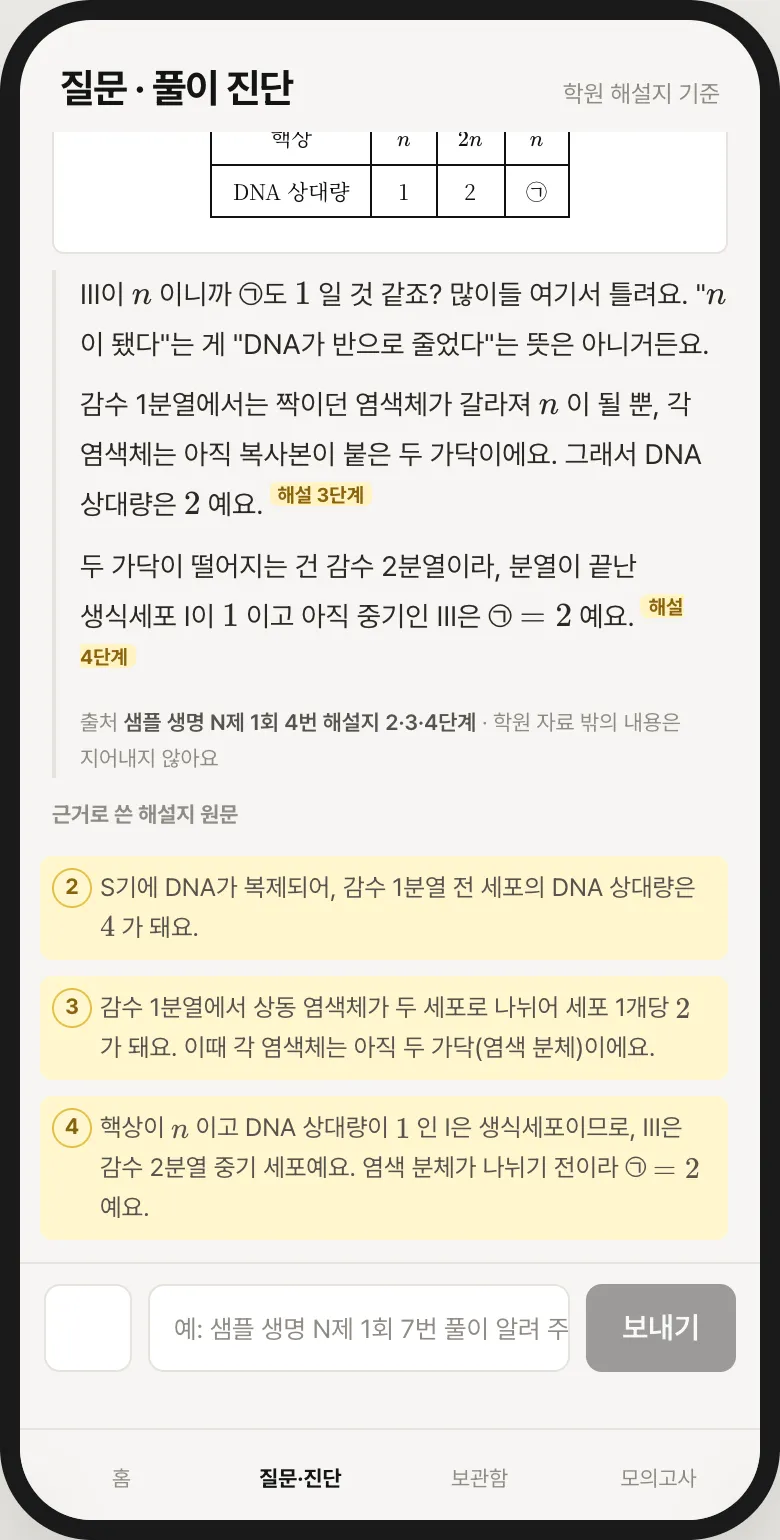
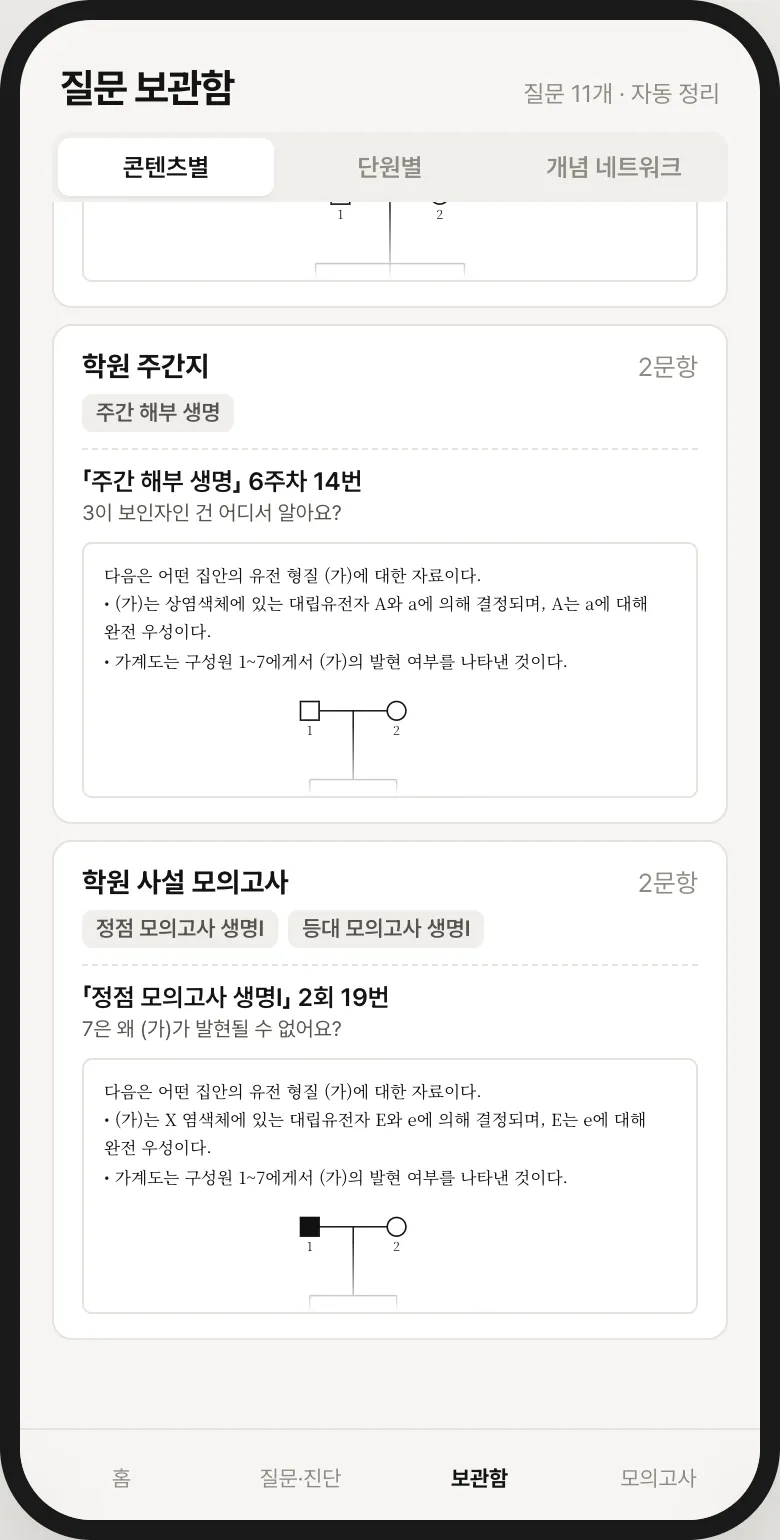
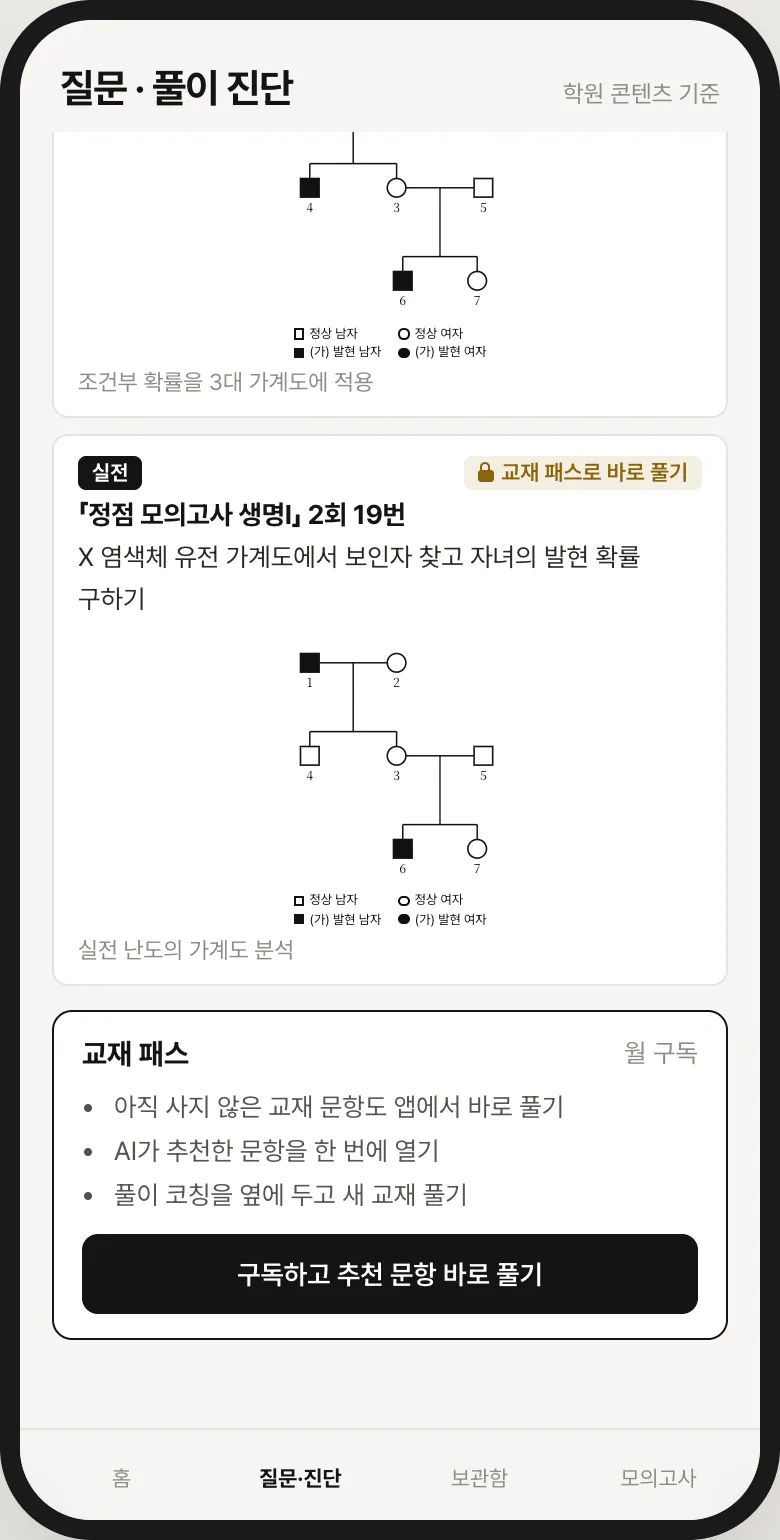
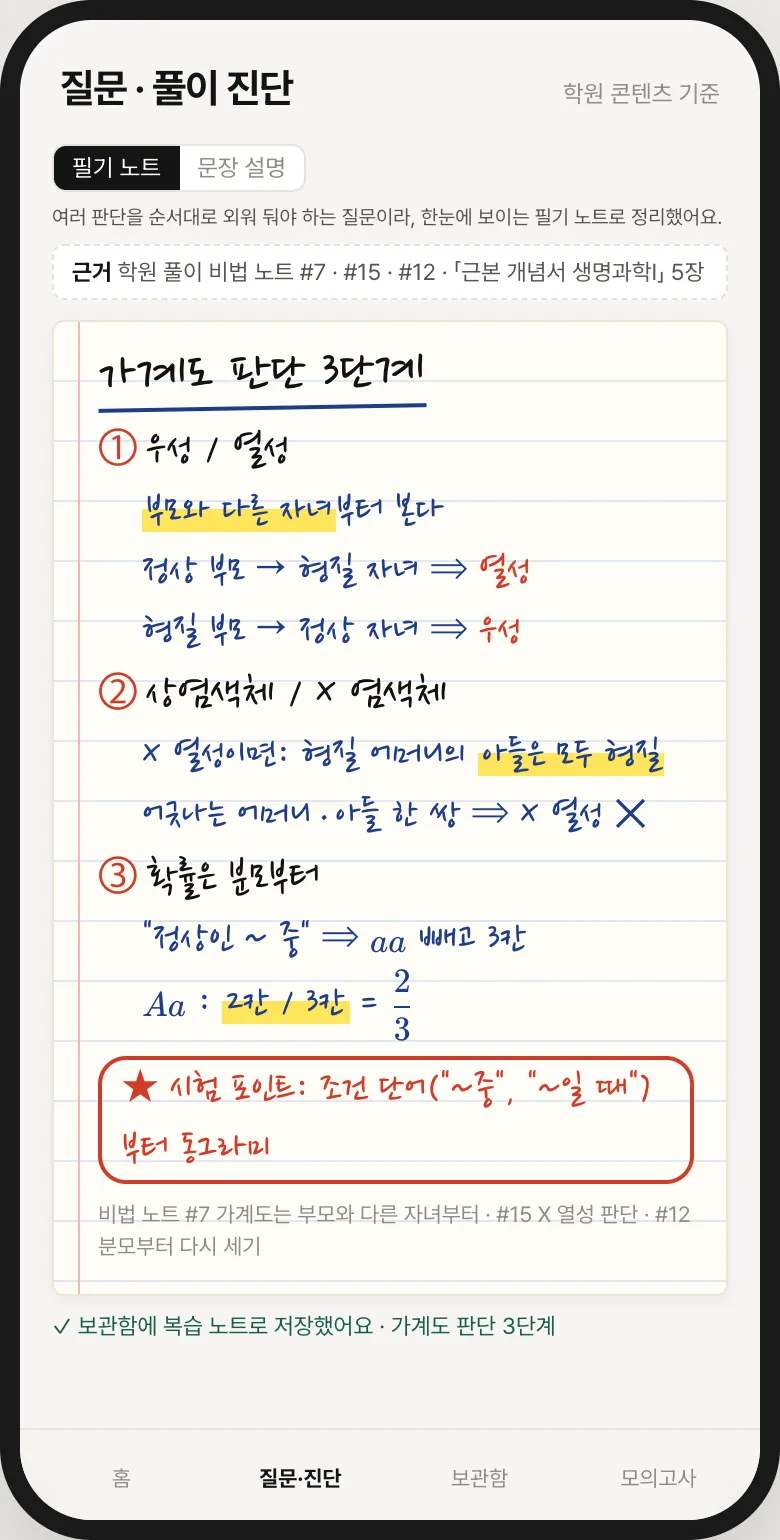
Answers rest on the content team's material, explained from where the student is confused.
The same answer sheet, a different best answer for each question.
Ask with the passage as evidence, organise it as a note, and let the record lead to the next book.
Watch the Korean demo ↗Students stuck on a hard passage have nowhere to ask, and what they worked through is never recorded.
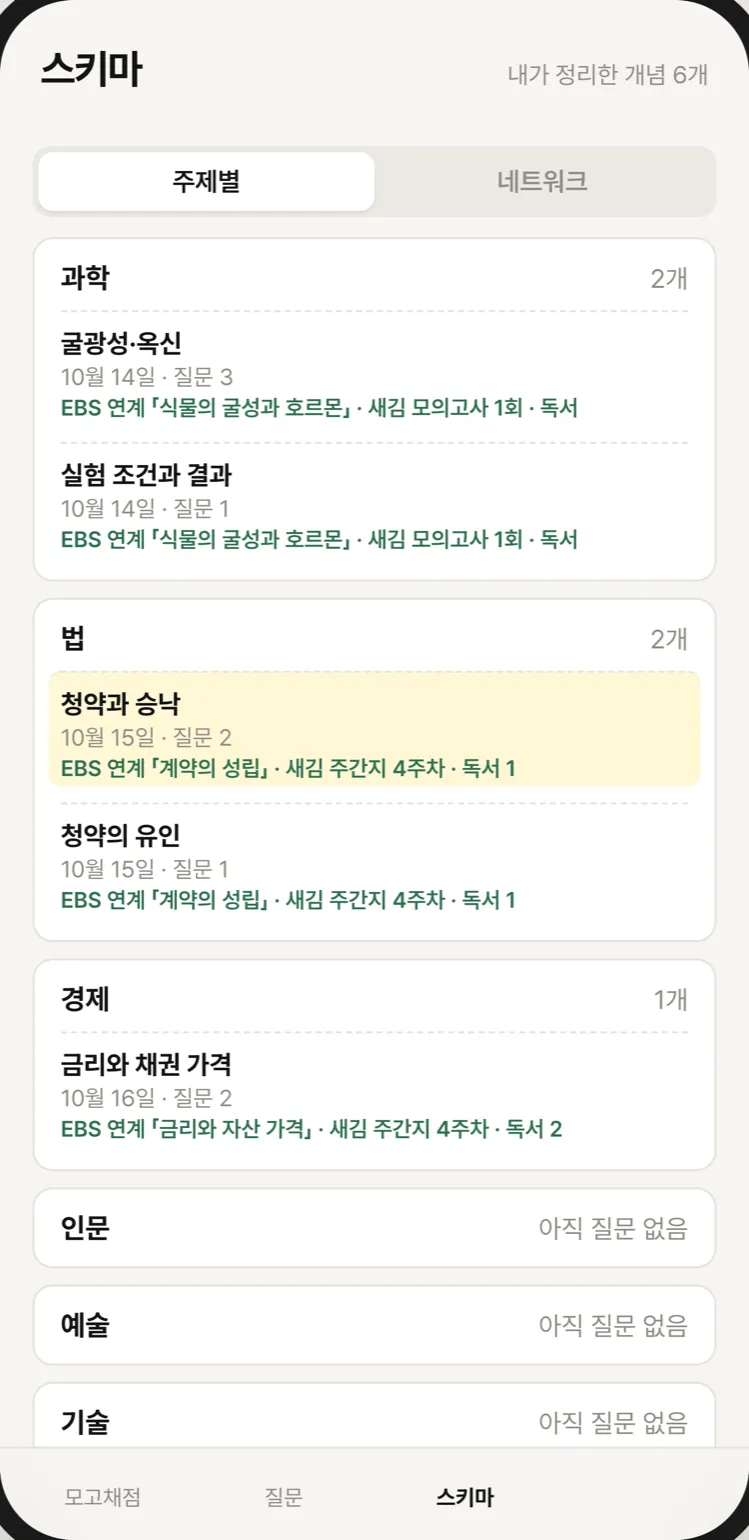
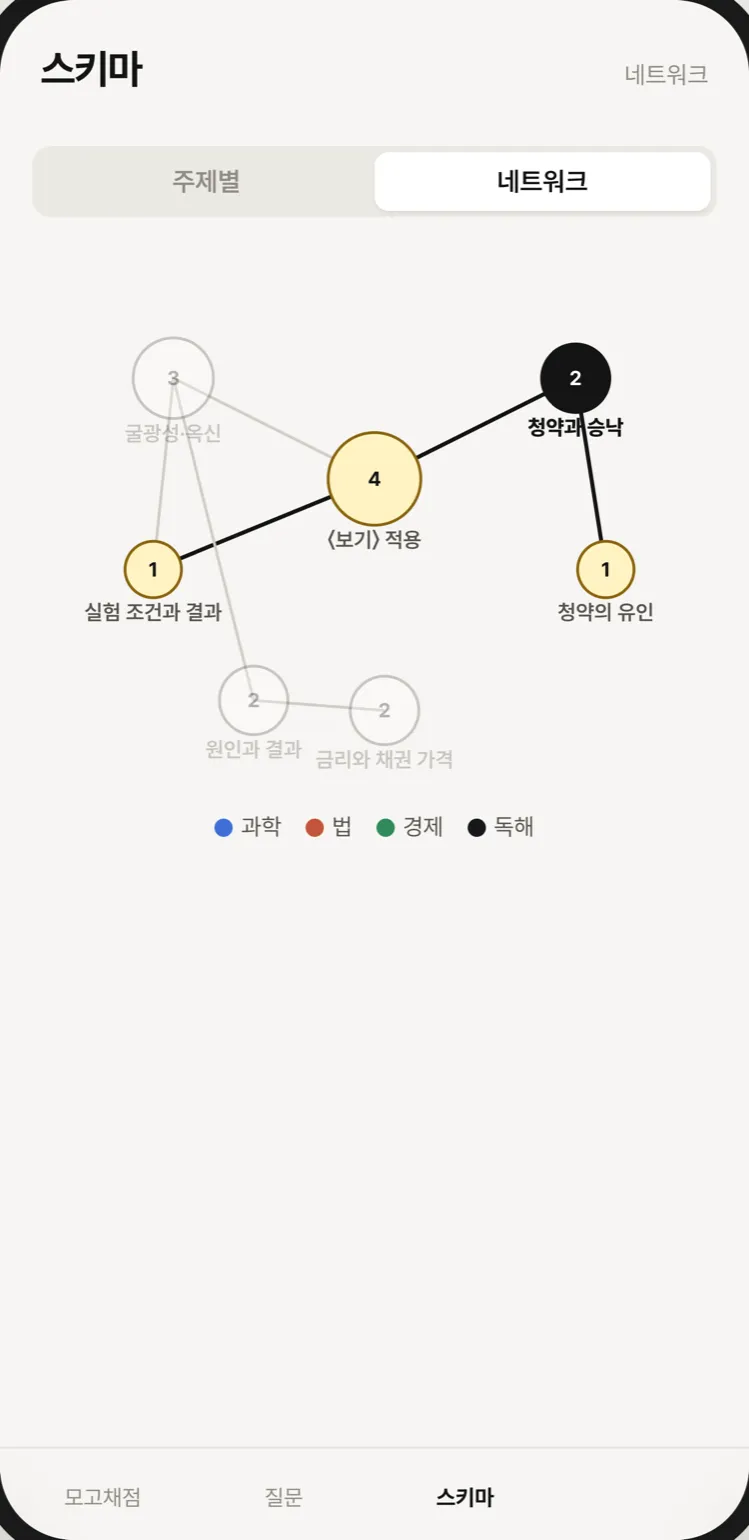
Passage-grounded answers, study notes, a question archive and EBS link analysis on top of the content.
Studying with this content leaves a record, and the record leads to the next mock exam or problem book.
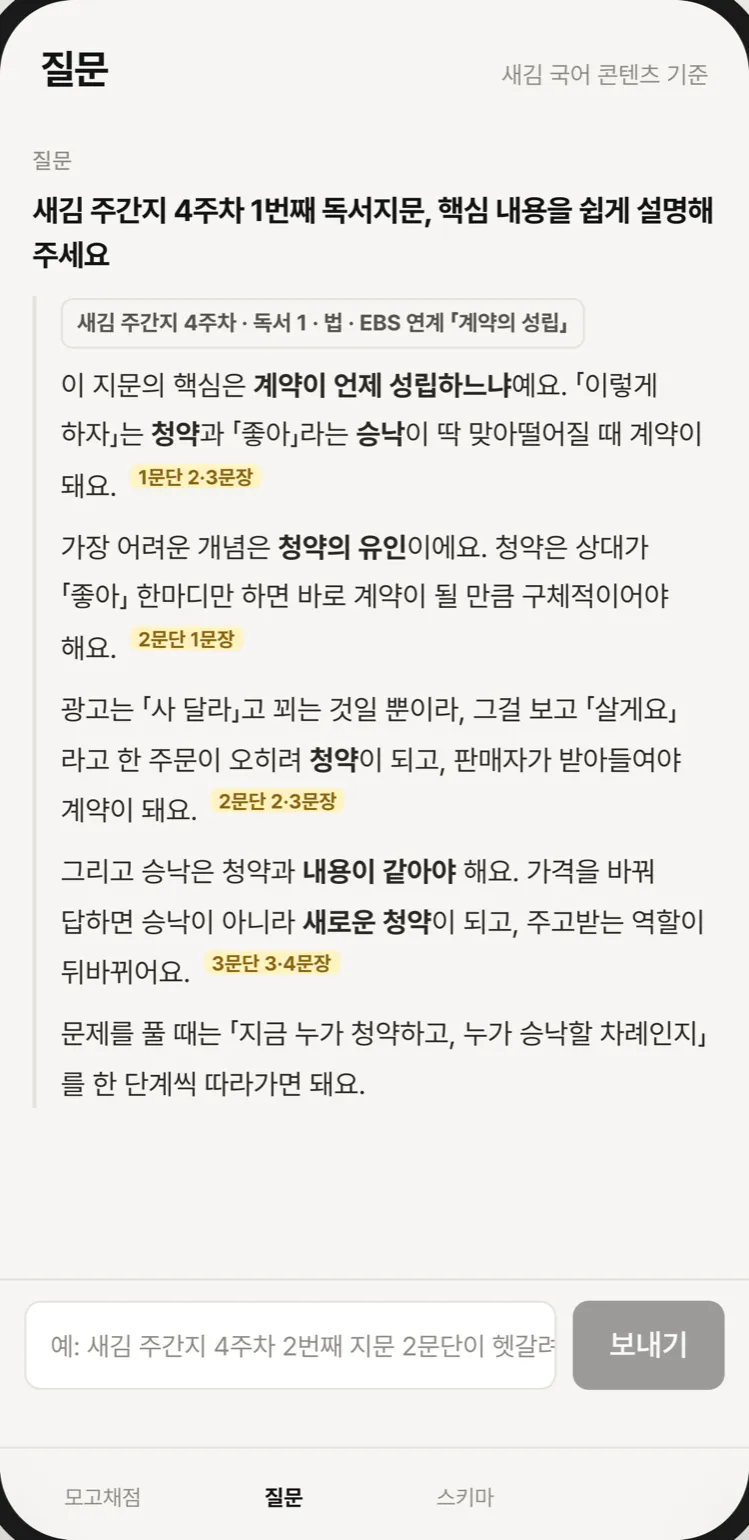
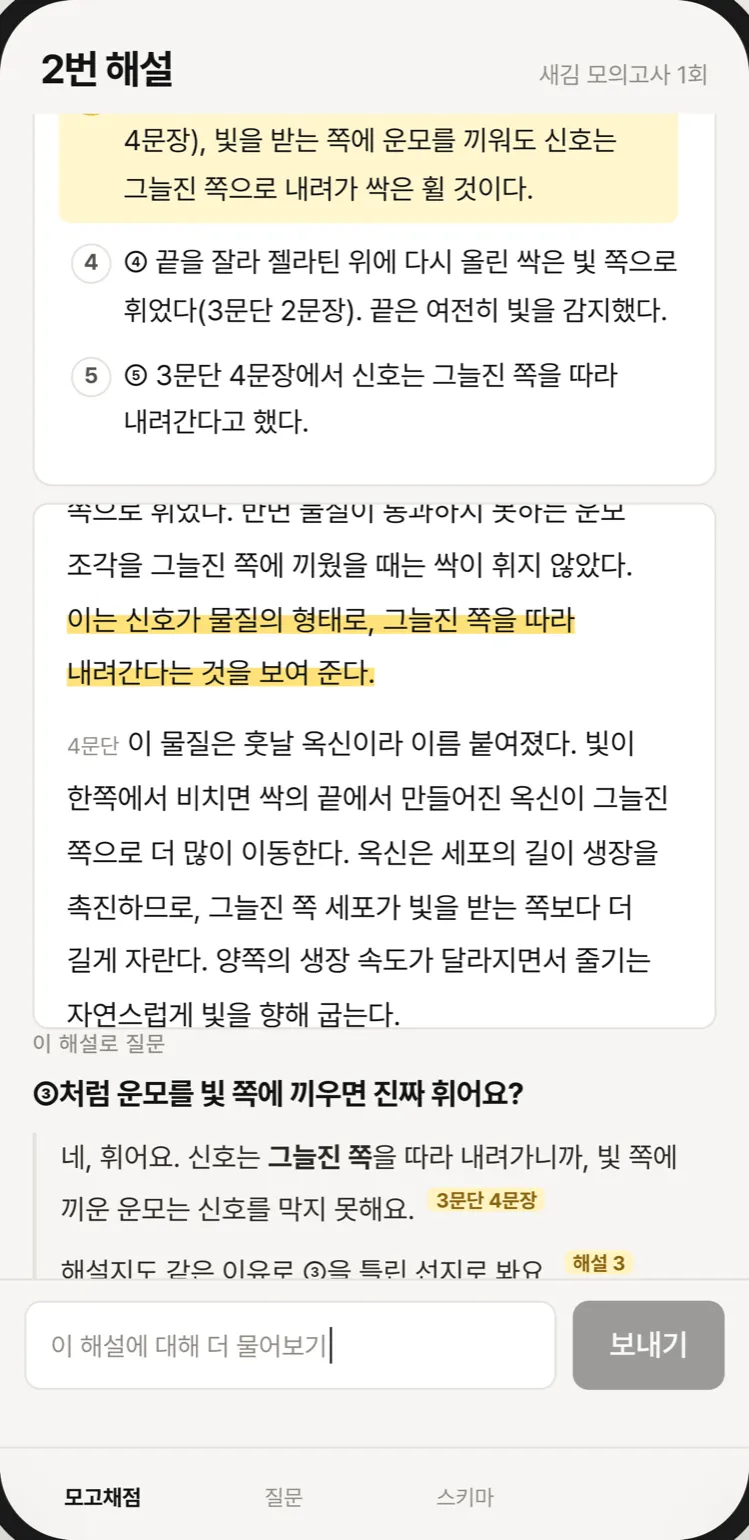
Every answer rests on sentences from the passage, cited by paragraph and sentence. Nothing outside the passage and answer sheet is made up.
Questions about a mechanism, experiment or process become one note with diagrams, a flow chart, highlights and the trap choice. A word-meaning question gets a short reply. Both are saved for review.
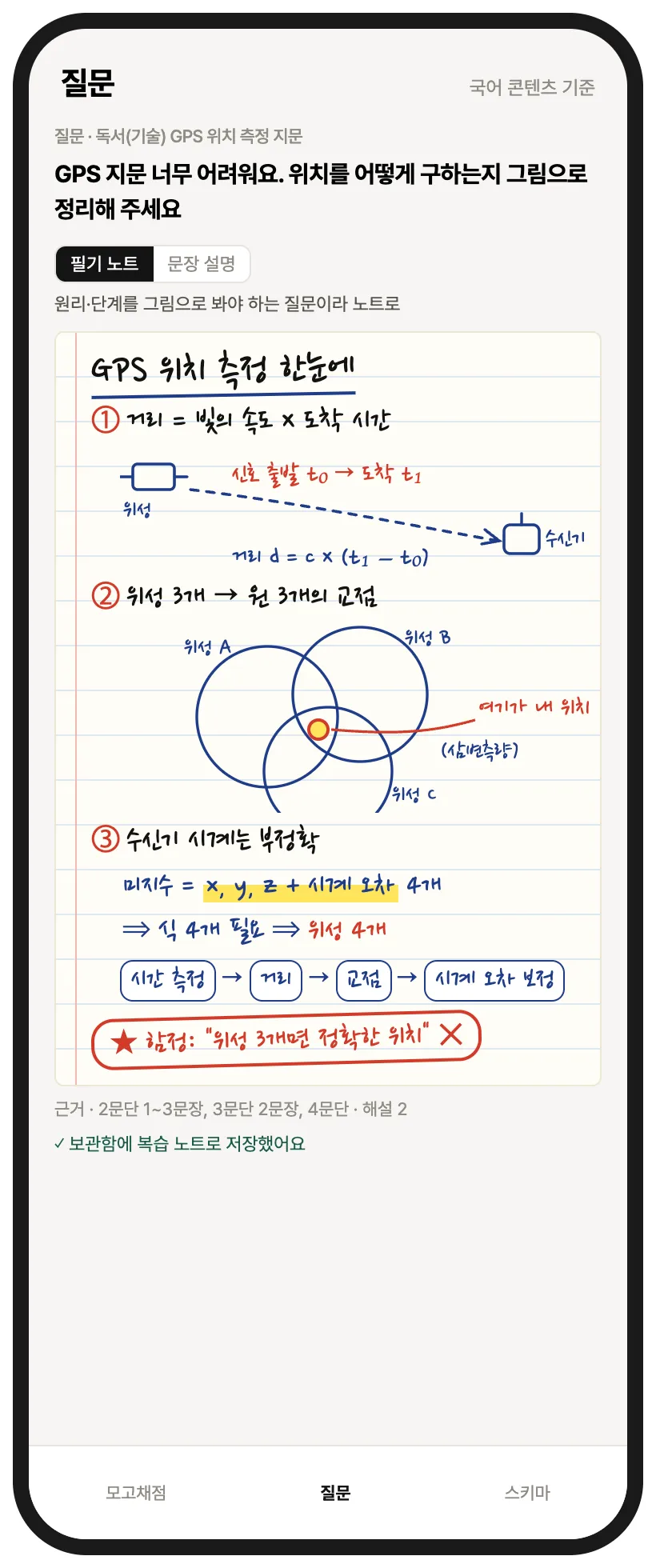
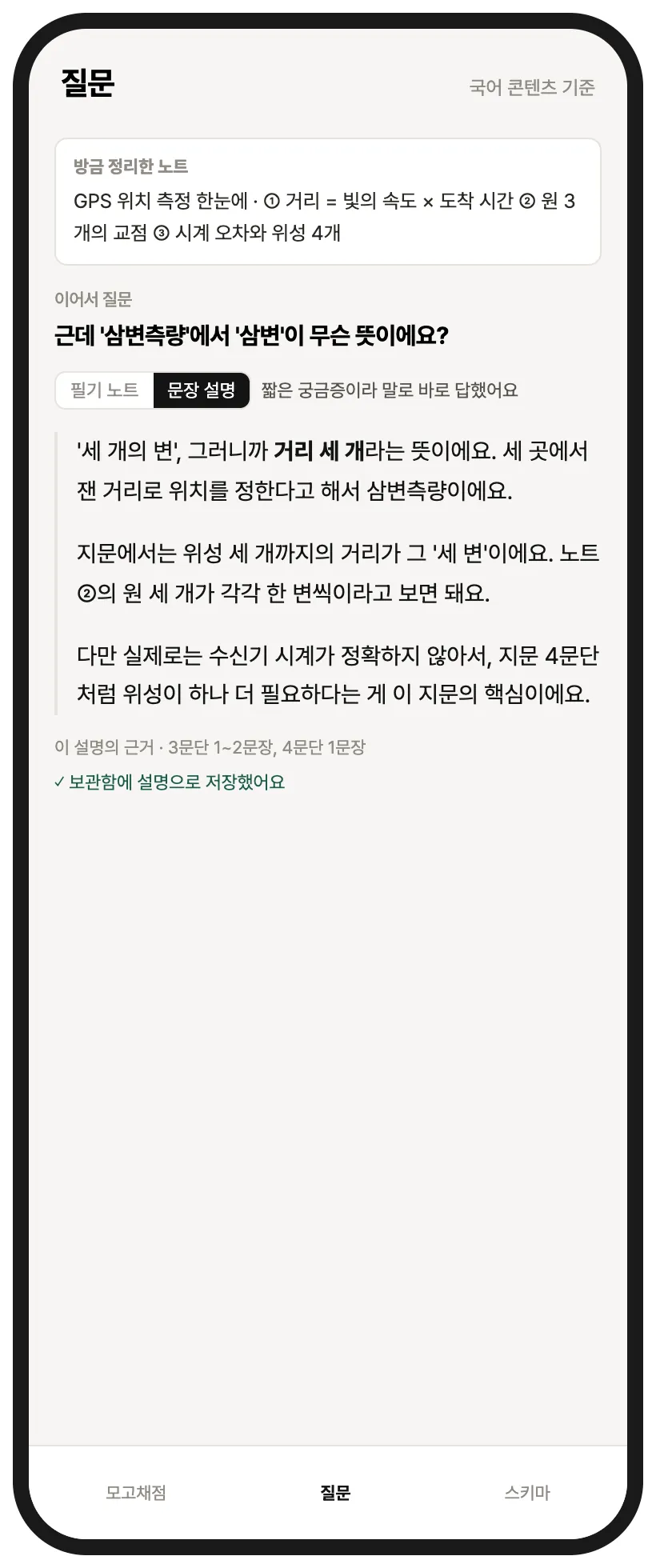
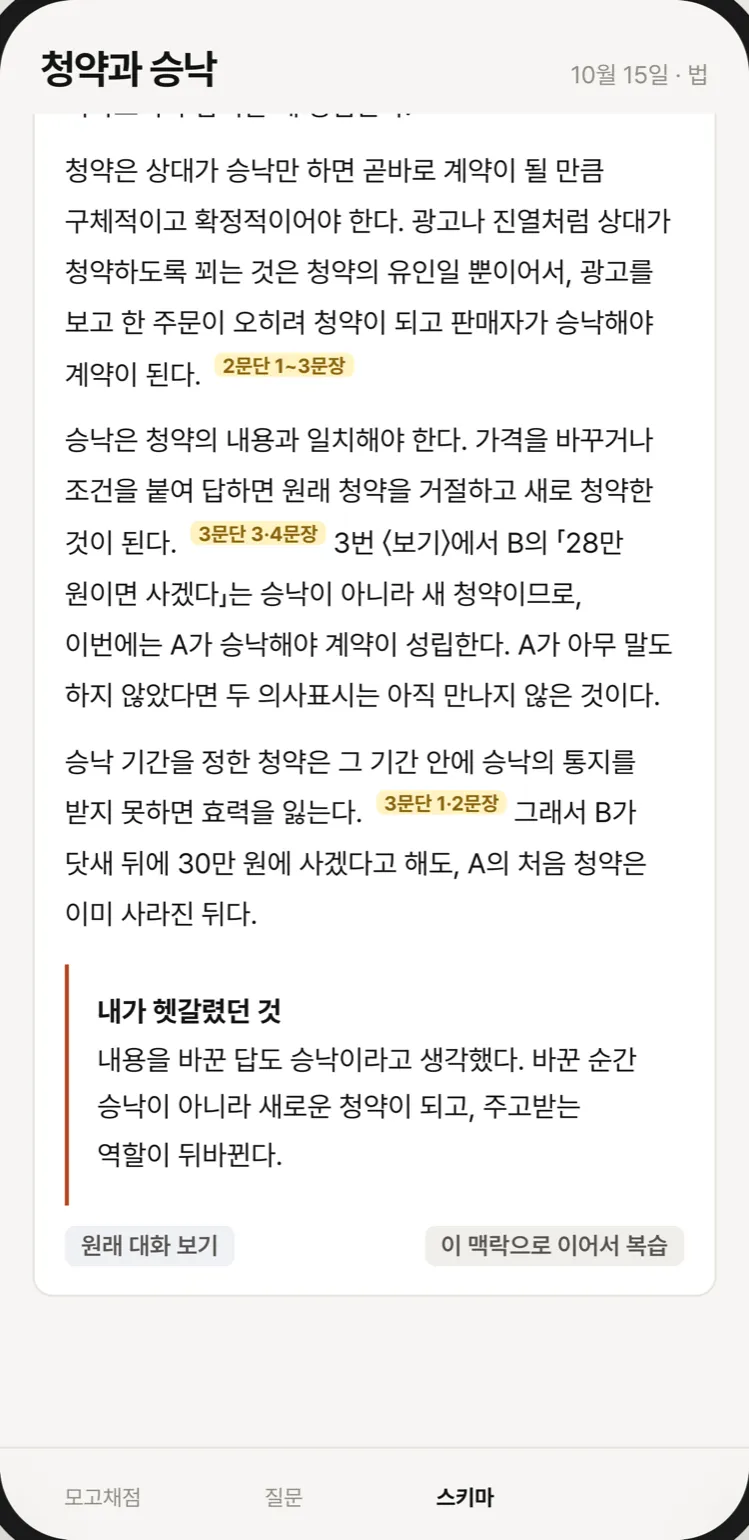
The day's questions and answers are written up with passage citations, in the student's own words, and review continues from there.
Not a free answer service: it opens with a purchased book and points to the next one.
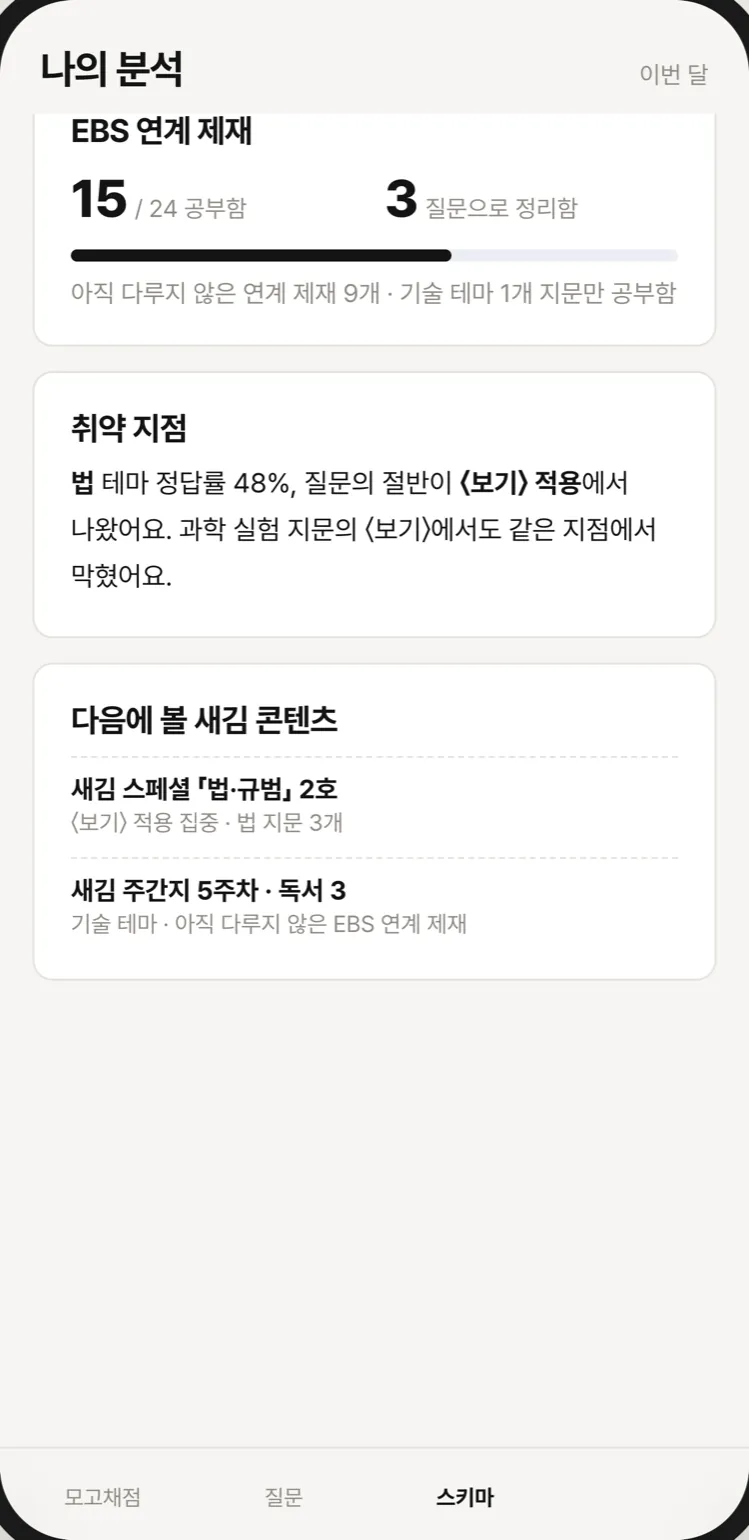
Unlocking includes the passages and some AI use; more is billed by use.
Recommended passages from unowned books open right away; recurring revenue.
Unlocking drives genuine purchases, recommendations drive the next sale, passages stay in the app.
Content-team data · which passages, choices and themes students struggle with and which EBS material they studied, item by item. Numbers and splits are examples.
Tune retrieval and explanations on a subset.
Measure accuracy, use and AI cost per passage.
All content, with unlock codes and the pass.
Demo screens use BISROUTE's own passages and invented book names.
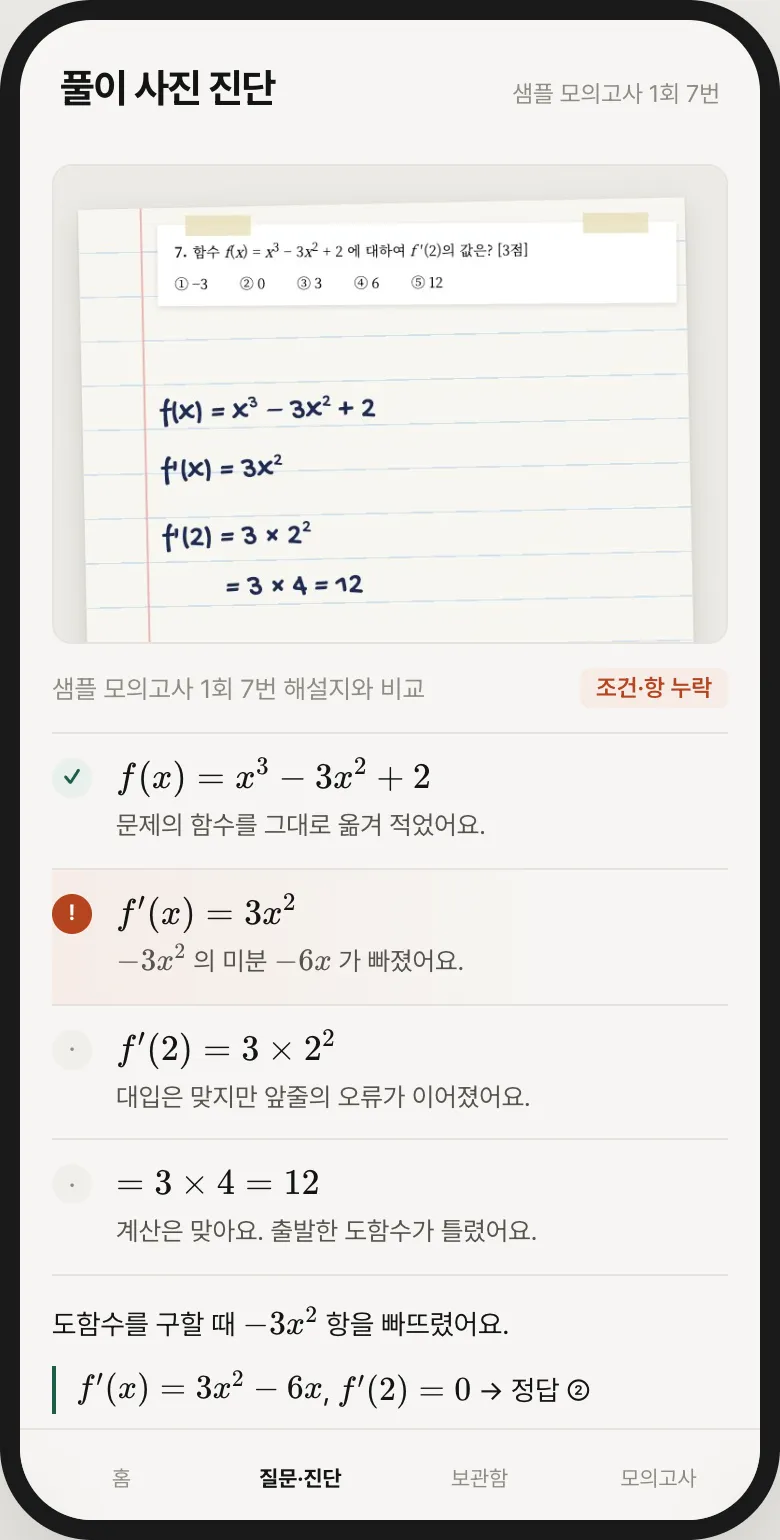
A code on the back cover unlocks the book in the iPad app's secure viewer. After a handwritten solution, the AI reads it and says whether it is right and how to do it faster or more comfortably.
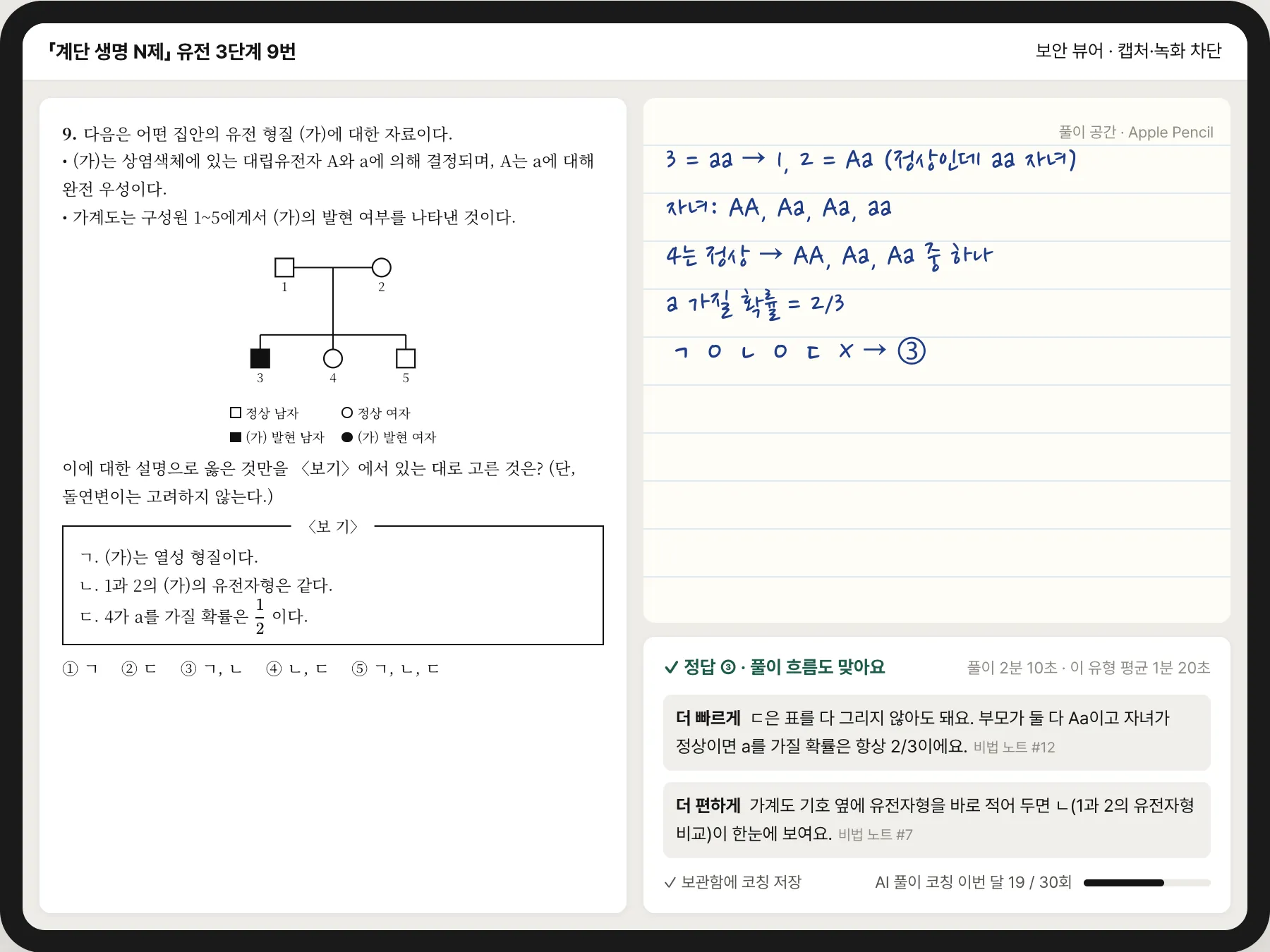
The team keeps adding the advanced concepts, solving tricks and common traps an answer sheet leaves out; the AI finds the right note for each question.
Both can run together. Numbers and splits are examples to agree on.
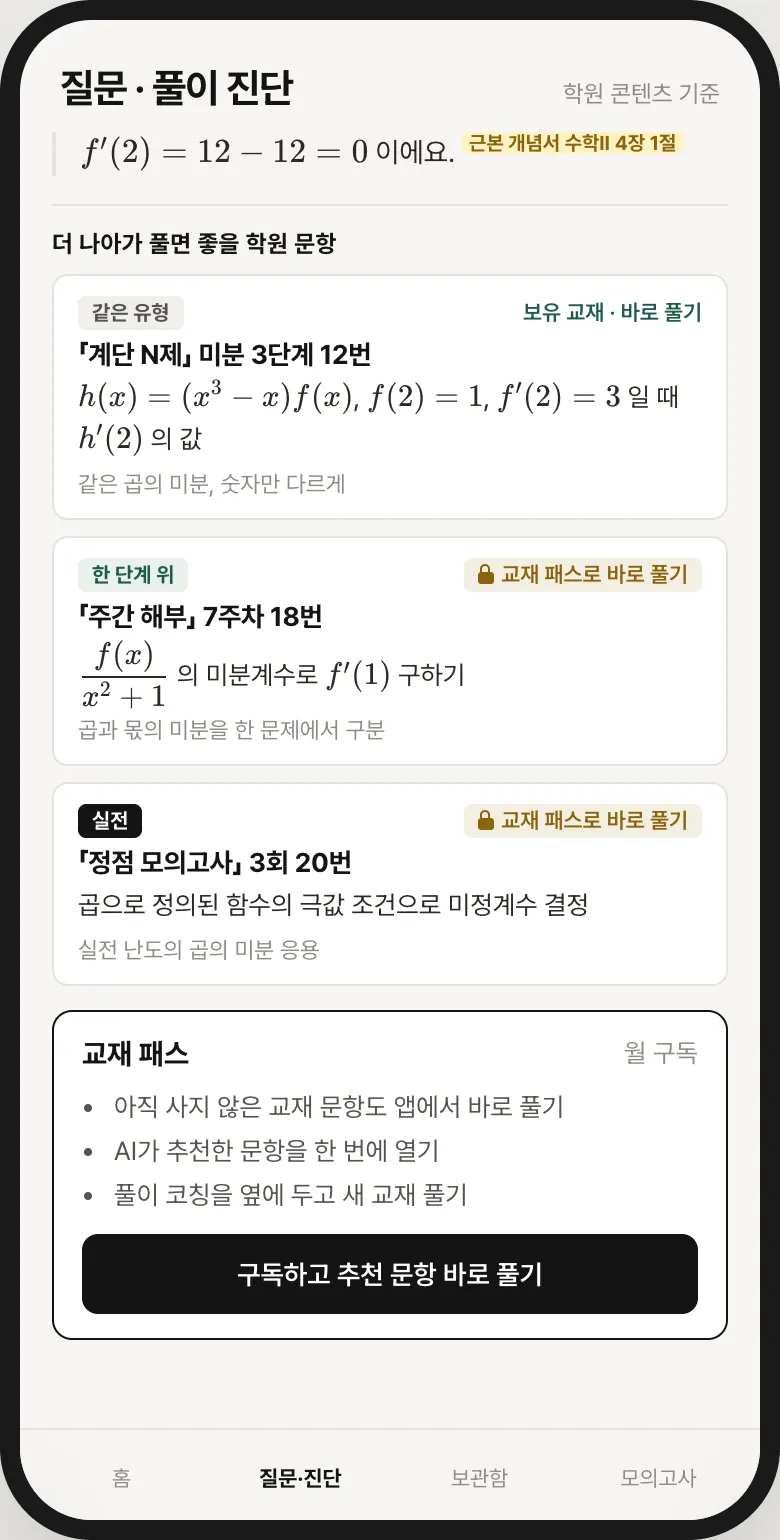
Unlocking a book includes its problems and some coaching (e.g. 30 checks). More is billed by use.
Recommended problems from unowned books open right away; coaching included up to a monthly limit.
Unlocking gives a reason to buy genuine books, the pass recurs monthly, and problems never leave the app.
Which problems draw questions and which mistakes repeat, problem by problem, for better explanations and the next book.
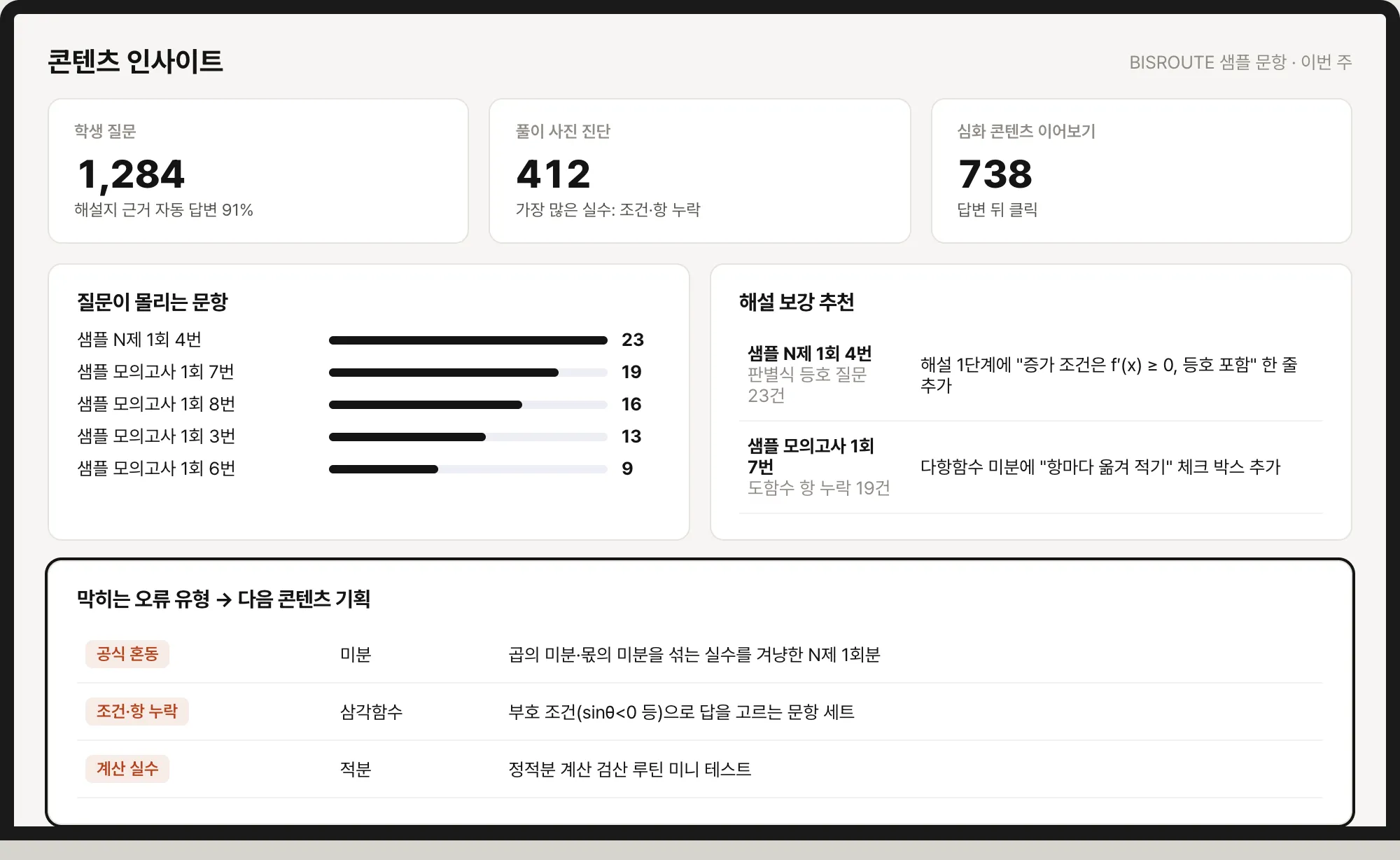
A subset of one subject's problems and answer sheets, to tune retrieval and answers.
One book or a class or two; measure accuracy, use and AI cost per problem.
More subjects and content, connected to existing systems and sales.
The public demo plays a scripted run. The real service answers with Claude from the academy's material, tuned to your problems in the pilot.
They are searched only inside the academy's account; student screens use a secure viewer and watermarks.
It does not make things up; it hands over to a TA, and those questions show where explanations need work.
One subject with strong answer sheets and in-house books, then expand after the pilot.
Demo screens use BISROUTE's own sample problems and invented book names.
Thinking about building something similar?
Start a Conversation →